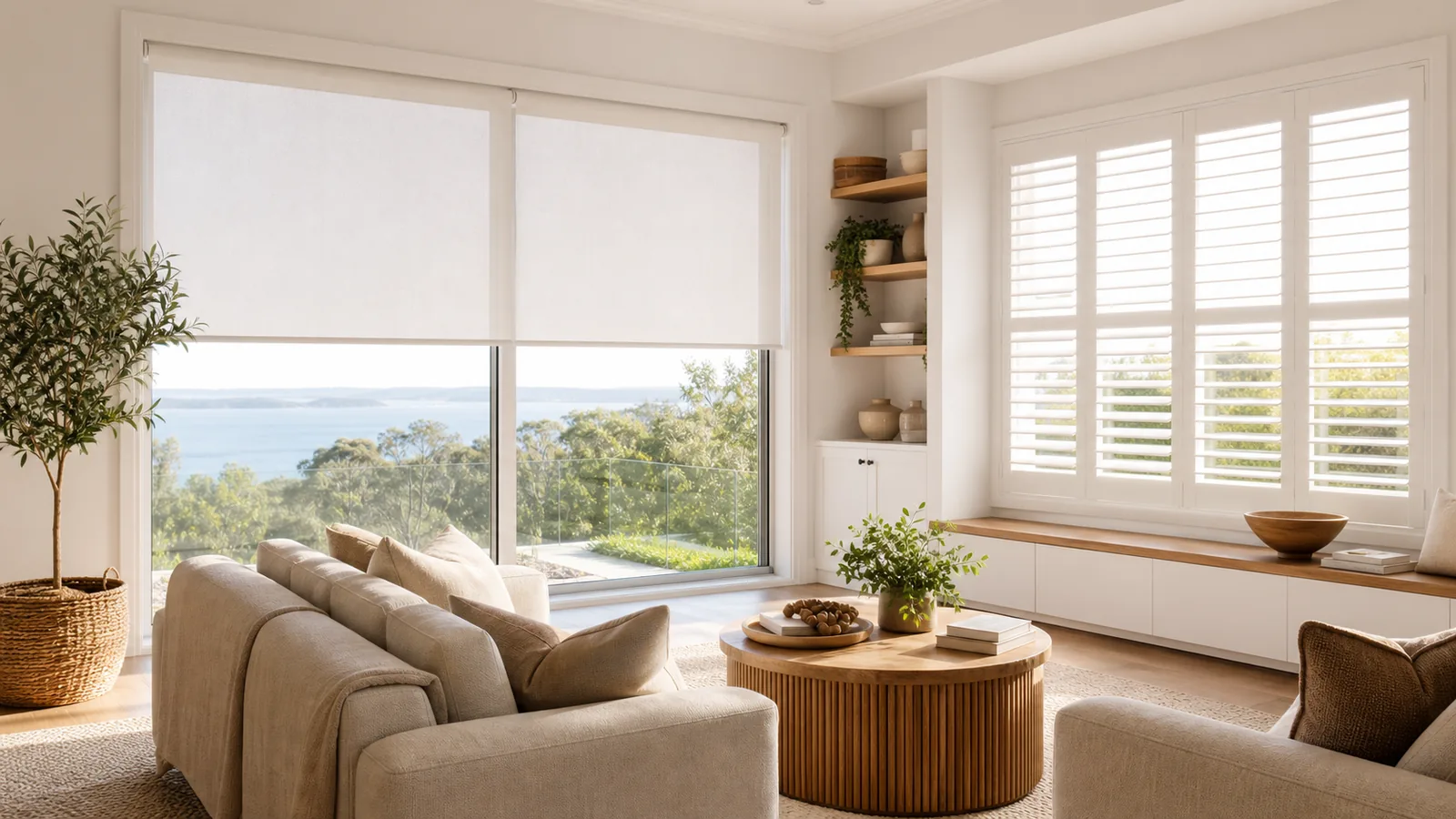
Describe what should be hidden and from where
Privacy can mean several different things. You may want to prevent a passer-by seeing faces, stop a neighbour looking at a desk, conceal a bed or simply make the room feel less exposed. Name the objects and activities that matter. “We need privacy” leaves too much room for different interpretations, while “we do not want the dining table visible from the footpath when the lights are on” gives the supplier something to evaluate.
Make a simple plan of the room, window and outside viewing positions. Mark your usual seat, the bed or desk, and any entrance that gives a clear line through the house. A window can expose more than the room immediately behind it when internal doors are open. Include the sightline you actually worry about instead of assuming the most obvious street-facing pane is the only problem.
Local context should come from your address. A Central Albury frontage with little separation from a path may need a different sample test from a Thurgoona side window facing another house. A raised porch, sloping block or neighbouring upper window can change the viewing angle. These are things to inspect on site, not characteristics to assign to every home in a suburb. Give the supplier a drawing or agreed photographs rather than asking them to infer the situation from the postcode.
Keep any inspection respectful. Check from your own property or a lawful public viewpoint, and obtain agreement before entering another property or taking photographs that include private spaces. You do not need to document a neighbour's activities to explain a line of sight. A sketch of the relative window positions is usually enough to start a useful conversation.
Test the actual sample in different lighting
Place the proposed sample at the window and compare it with the current covering. Look from inside at the view out, then have someone in the household assess the agreed outside viewpoint. Repeat with the room's normal lamps on after dark. Note what remains visible: broad shapes, movement, faces or details on a desk. The aim is an agreed result in your conditions, not a promise based only on a fabric label.
A small swatch is useful for colour and texture but may be a poor stand-in for a completed covering. Ask whether a larger sample, display or temporary demonstration is available. Do not mistake a hand held immediately behind a sample for the same test as a person sitting further back in the room. Use the actual viewing distances and furniture positions wherever possible.
Luxaflex describes dual rollers pairing blockout with sunscreen or sheer fabric for different daytime and evening uses. This is a primary manufacturer example of separating those functions. It is not evidence that a single sheer provides the same privacy in every lighting condition, or that a particular branded range is supplied here. Confirm the exact fabric with the quoting supplier.
Test edges and partial openings too. A fabric can meet your privacy preference through its centre while a side gap offers an oblique view into the room. A curtain that closes well at the centre may leave a return exposed beside a wall. Ask the measurer to show how the complete treatment finishes, particularly where a person walking past can see along the edge rather than directly through the cloth.
Choose an arrangement around the compromises you accept
| Priority | Option to discuss | Question to settle |
|---|---|---|
| Keep some daytime outlook | A tested view-through layer with a separate privacy layer. | What is visible from outside in the room's actual lighting? |
| Admit light without a clear outlook | A suitable light-filtering fabric. | Are silhouettes and close objects acceptable after dark? |
| Close the room visually in the evening | An opaque layer with appropriate edge and join treatment. | How do the centre, sides and bottom finish? |
| Adjust the direction of the view | An adjustable-louvre product, if appropriate. | Does the chosen angle protect against the actual elevated or side sightline? |
For rollers, consider whether the daytime layer and evening layer can operate independently without blocking access to the controls. For curtains, discuss a twin track or a separate blind behind the sheer. The right combination depends on available space and the way the room is used. A more complex arrangement only helps if people can operate it comfortably and understand which layer does which job.
Do not let “one-way privacy” become an untested shorthand. Ask what the supplier means, which fabric they are describing and under what lighting they expect it to work. Write any limitations into the selection notes. If you would be unhappy with visible silhouettes, say so before approving a light-filtering option. If silhouettes are acceptable but facial details are not, that too should be explicit.
Adjustable louvres can be appealing where you want to change the view, but assess them from the relevant angle. Closing a view from the street does not necessarily address a sightline from above or from the side. Ask for a demonstration with the intended panel divisions and operating position. Do not order solely because a showroom window appears private when viewed from one convenient standing point.
Where privacy and door access meet, use a separate access check. A curtain may screen a living room effectively but be left open in practice if it blocks the sliding-door handle. The sliding-door guide explains how to evaluate parking space and operating sequence. A privacy system needs to be convenient enough that the household actually uses it.
Coordinate the frontage without forcing every room to match
You can ask for a coherent appearance from outside while giving each room a different function. A front bedroom may need an opaque evening layer, while an adjacent living room prioritises daylight and a view. Discuss common colours or outward-facing finishes instead of automatically specifying one product throughout. Have the supplier show the street-facing side of each sample, including any backing that differs from the room-facing colour.
Look at the proposal with all coverings open, partly closed and closed. The tidy arrangement shown in a presentation may depend on every blind being at the same height, which may not match daily use. Decide whether that matters to you. It is better to accept ordinary variation in advance than discover that the preferred frontage requires everyone to operate every room in unison.
For an existing East Albury frontage, include the window trim, mullions and any feature glass in the discussion. For a recently completed room, include the finished wall and furniture colours. Neither situation requires a claim about heritage controls or building requirements. If there are property-specific restrictions on alterations, provide the relevant documentation to the supplier and obtain appropriate advice before specifying fixings.
Check what the room feels like during the day with the proposed privacy setting. Can you still read comfortably, see the entrance and distinguish the garden? A sample that solves the outside view may change the interior more than expected. Try the setting during the activities that matter: breakfast, reading, working or watching television. Decide which compromise you prefer while the choice is still reversible.
Write a privacy brief that can be checked
Use plain observations: where the viewer is, where the person or object is inside, which lights are on and what should no longer be visible. Attach the selected fabric reference and the agreed mounting arrangement. If a layered system is proposed, state which layer is intended for each condition. This turns an abstract preference into something the supplier can discuss and you can review after fitting.
Include control positions and the household routine. Someone who leaves before sunrise may want a simple way to close the evening layer without disturbing other occupants. A shared lounge may need a control everyone can find. Automation, if proposed, should have a clear manual override; ask to demonstrate that rather than treating a schedule as a substitute for checking the actual outside light.
After installation, repeat the agreed viewing tests with the household's consent. Check the joins and returns as well as the centre of each covering. Record any discrepancy with the approved brief and ask the supplier to review it. A measured, specific description is more useful than saying the fabric “does not feel private” without explaining the sightline or lighting involved.
Build your enquiry checklist
Select the conditions that apply to your room. Each item includes the question to raise with the supplier. Your selections stay on this page only and are not submitted or saved.
Privacy questions
Can I keep the sheer closed all the time?
You can discuss that preference, but first test whether it meets your privacy requirement in the evening. Also check access to windows and controls. If it fails the after-dark test, a separate opaque layer may be more useful than choosing a denser sheer by guesswork.
Should I choose white or dark sunscreen fabric?
Compare the exact samples for both the outward view and the room's appearance. Do not infer privacy performance from colour alone. The supplier should identify the fabric construction and help assess it at the window under the lighting you use.
Will matching all front windows be cheaper?
There is no reliable universal answer without an itemised quote. Ask the supplier to separate the cost and purpose of each treatment. Matching appearance can sometimes be achieved through colour or backing while different rooms retain different operating arrangements.
Can privacy be checked from inside only?
That leaves the important outside viewpoint untested. Arrange a respectful check with another household member at an agreed position. If the relevant viewpoint is inaccessible, explain that limitation and ask the supplier how the risk can be assessed without entering someone else's property.
Discuss the details before ordering
Describe the sightline that bothers you, when the room is occupied and whether keeping an outlook matters. Include a room-side photograph and a simple sketch of the path or neighbouring window. Ask to compare samples under the lighting that matters.
Send a window-furnishing enquiry
Prefer to talk? Tap to call. Confirm the proposed product, scope and appointment availability with the supplier.